



Lift for a business centre: how to consider passenger flow, image and operating costs
Lift for a business centre must ensure stable passenger flow, comfort during peak hours, a representative cabin appearance and predictable maintenance.
Selection begins with analysing the number of floors, tenants, people movement scenarios and design requirements. For a business centre, not only the lift itself matters, but also people flow: how people enter the building, move between floors and use the lifts in the morning, at lunchtime and at the end of the working day.
How a business centre differs from a residential building
In a residential building, lift load is usually distributed unevenly throughout the day, but follows predictable everyday scenarios. In a business centre, people movement is concentrated within short periods: the start of the working day, lunch, meetings, the end of the working day, events or client visits.
That is why a commercial lift should not be assessed only by its basic specifications. It is important to consider the number of tenants, the type of businesses in the building, operating hours, number of visitors, and the location of the reception area, parking, conference zones and technical floors.
For the owner of a business centre, the lift is part of the service provided to tenants. If users face queues, delays or frequent downtime every day, this affects not only comfort but also the perception of the property.
Passenger flow and peak hours
Passenger flow should be analysed before equipment is selected. It is important to understand how many people will use the lifts, how they are distributed between floors and which movement scenarios will be the most frequent.
A typical project checklist:
- number of floors;
- number of tenants;
- expected number of employees and visitors;
- peak hours;
- number of lifts in the group;
- connection with parking or the entrance area;
- cabin requirements;
- service model;
- lifecycle budget.
If these parameters are not taken into account at the start, even high-quality equipment may not match the real logic of the building. That is why office real estate requires not a standard selection, but a technical solution for a specific property.
Cabin design as part of the impression
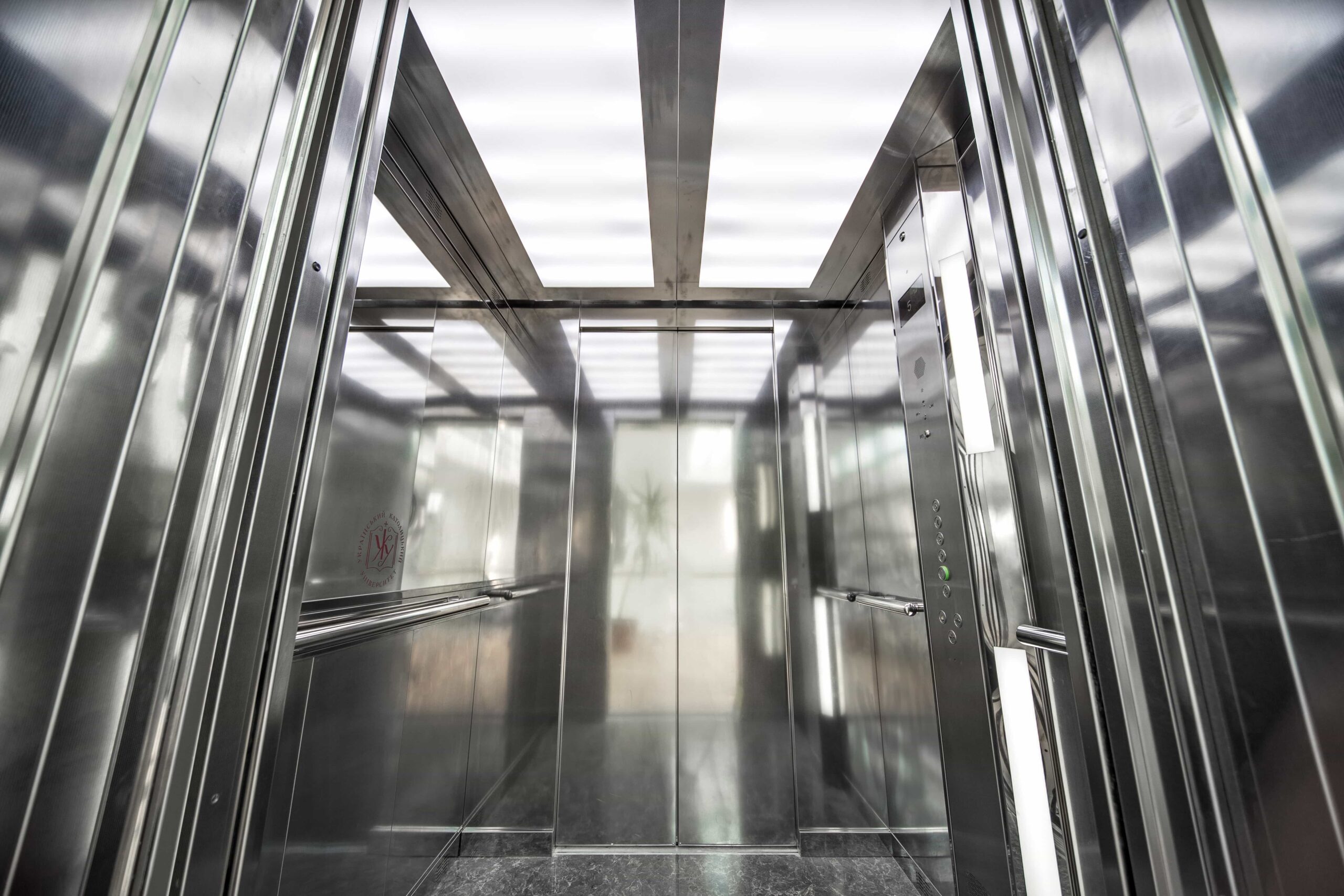
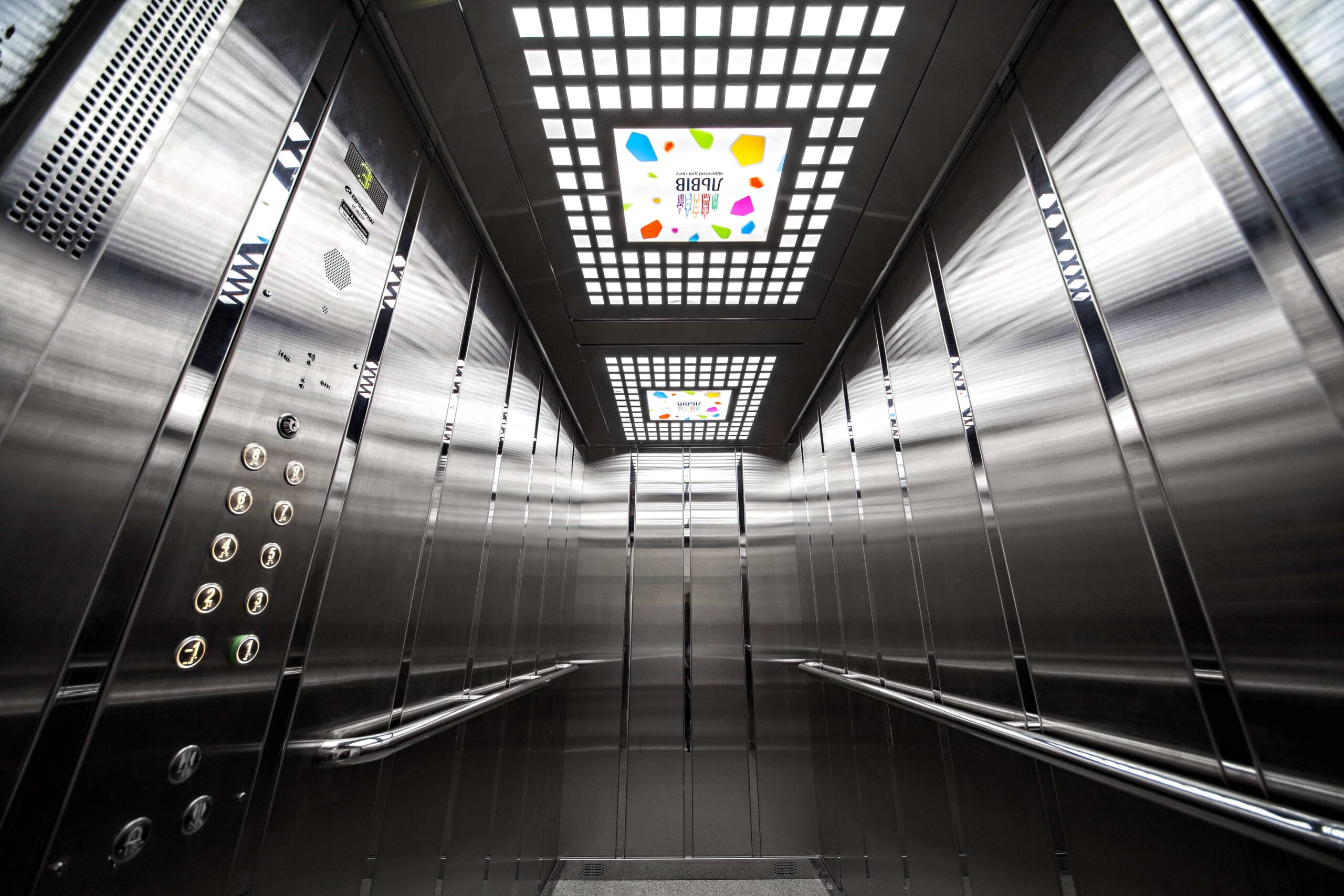
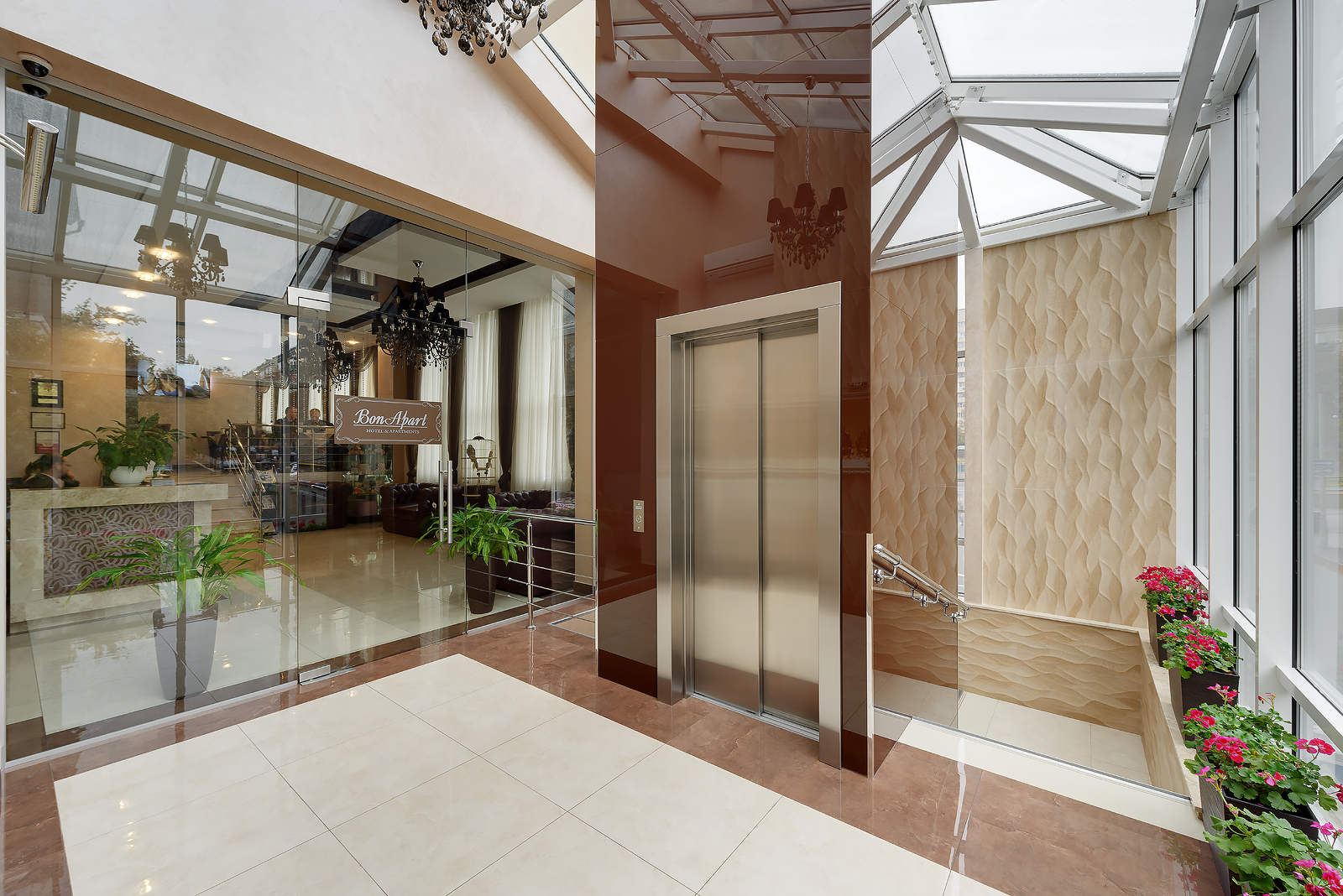
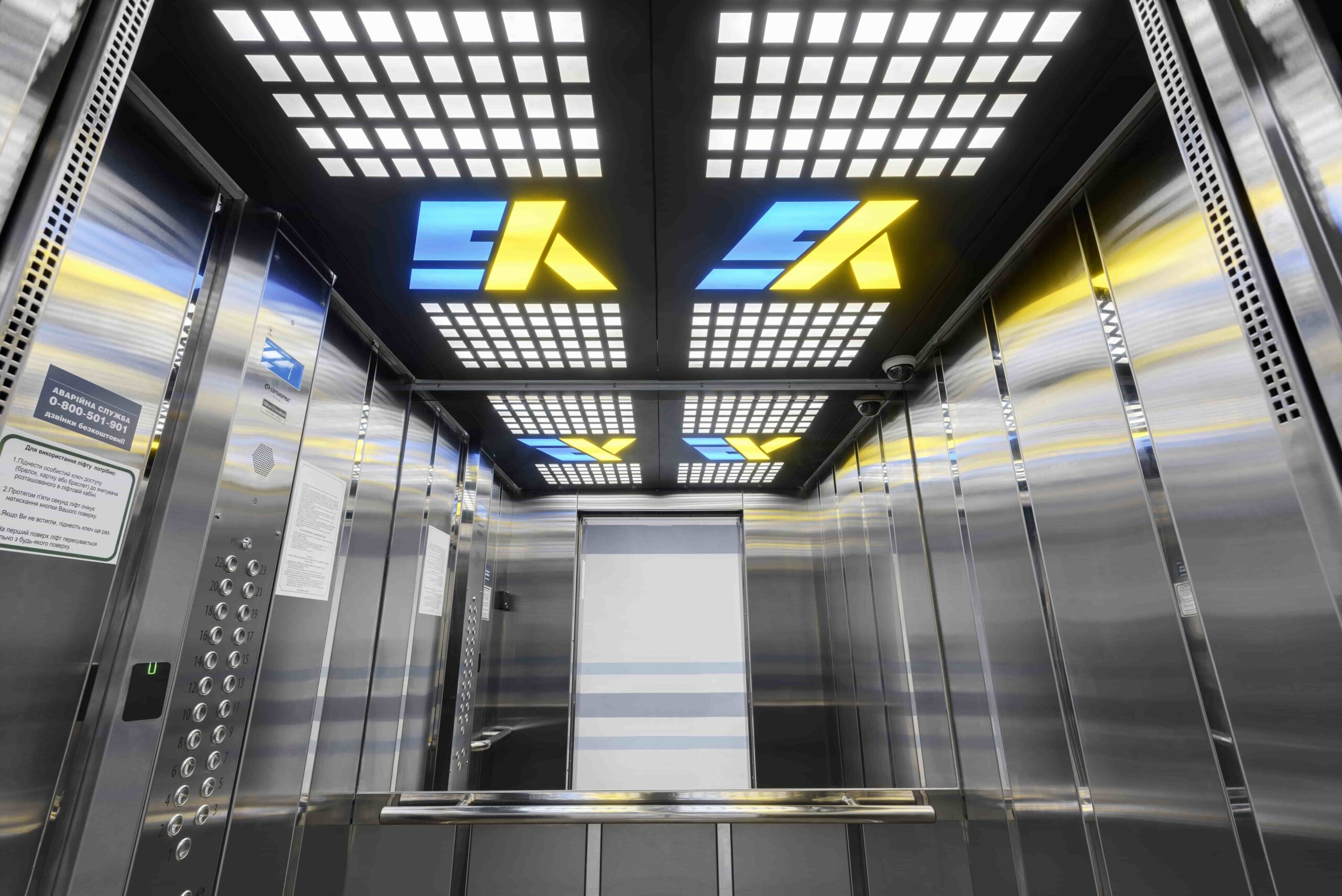
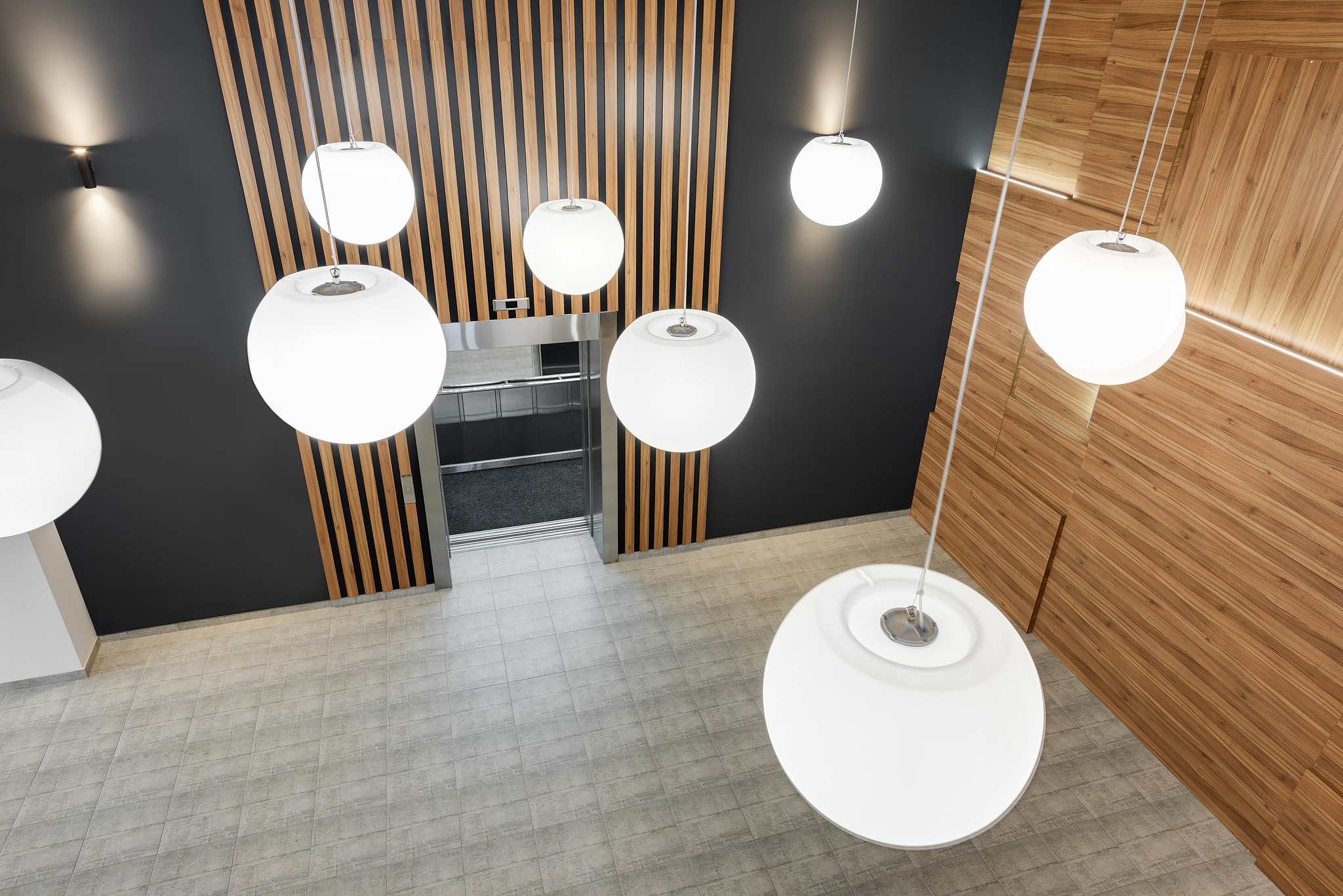
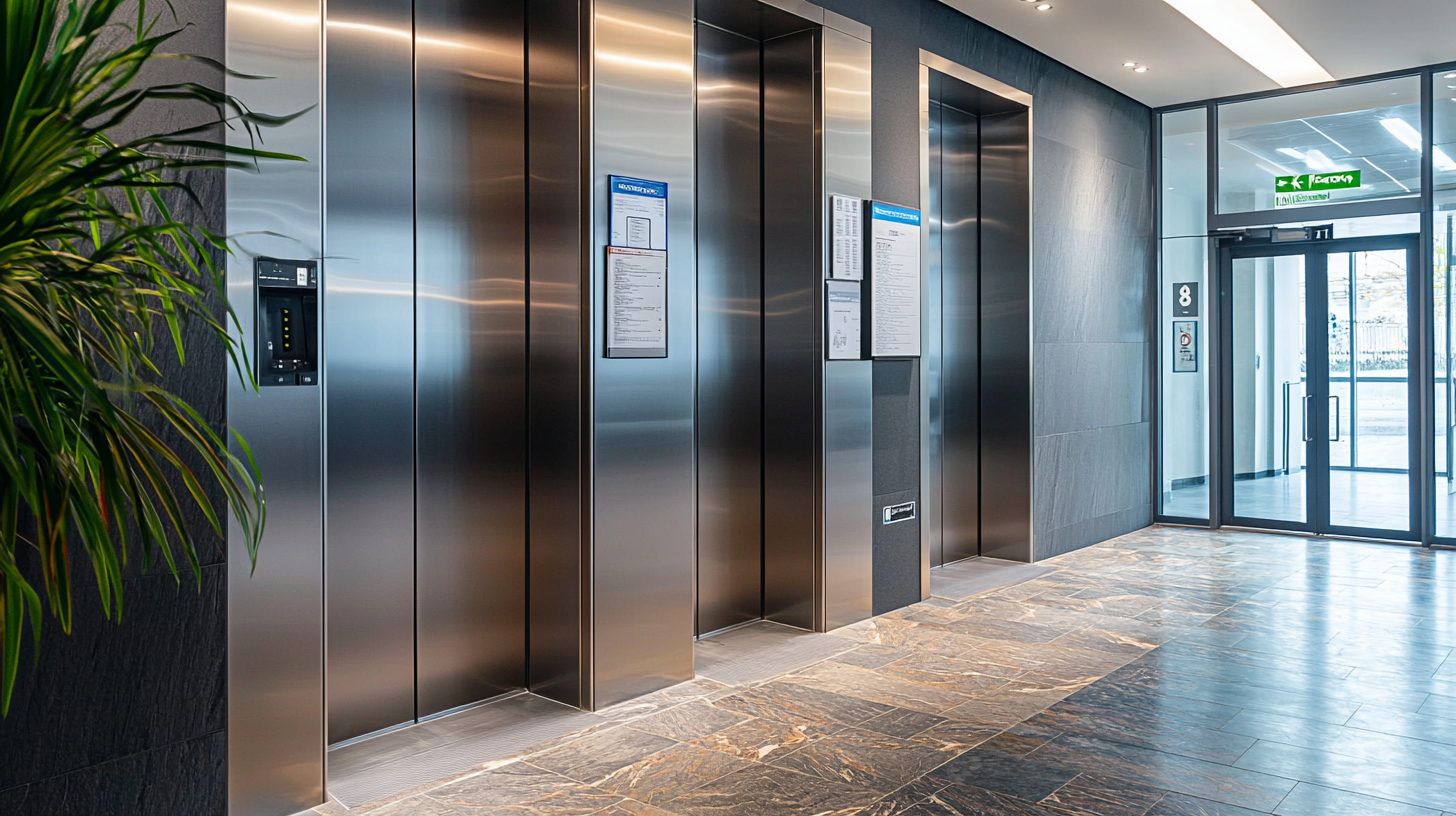
The lift cabin creates the first tactile and visual impression of a business centre after the entrance area. For a premium property, it should support the overall architectural concept. For a practical office centre, it should be convenient, durable and easy to maintain.
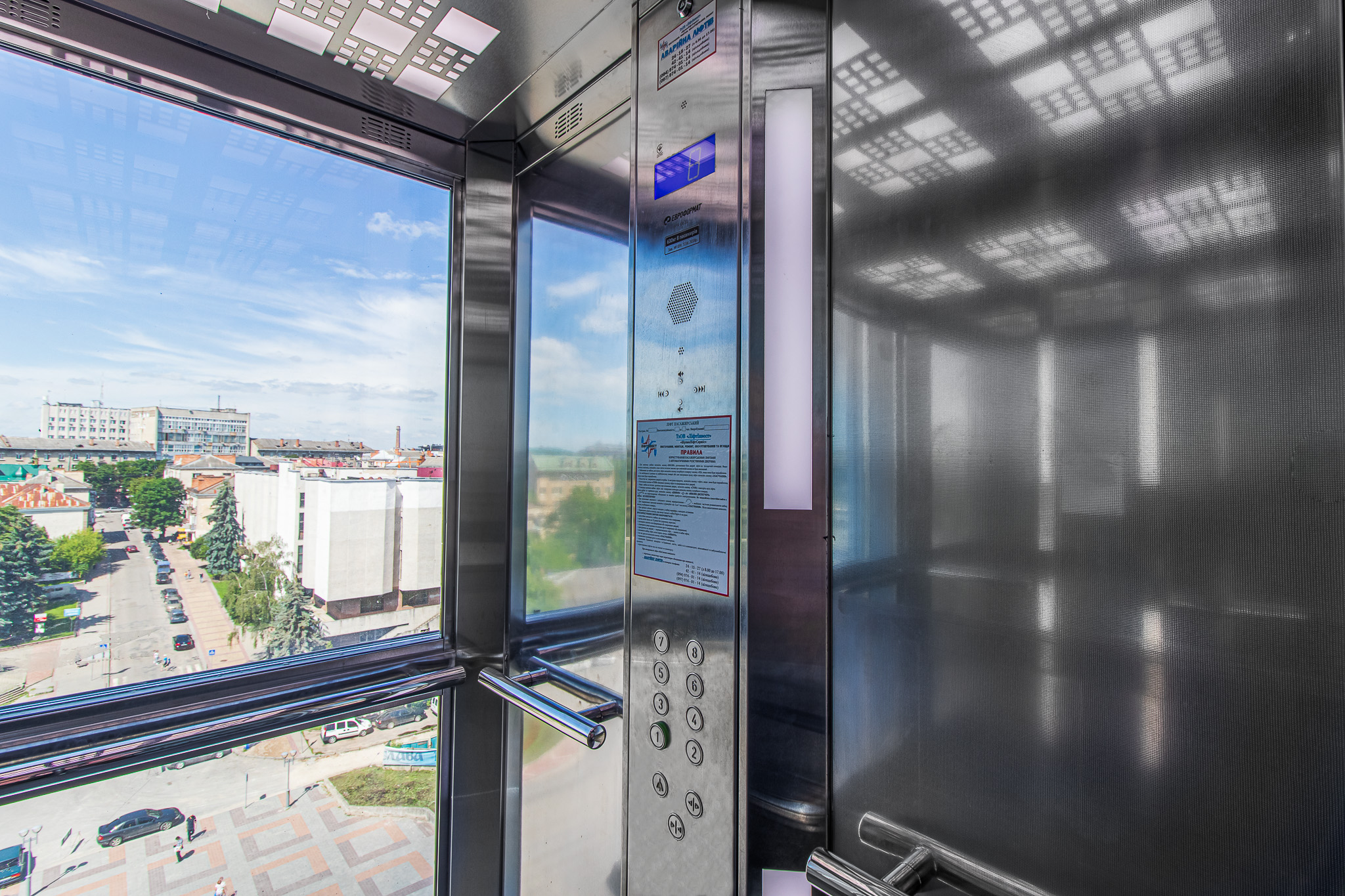
Cabin design should not be seen only as a decorative element. Materials, lighting, the control panel, mirrors, handrails and surface durability all affect daily operation. In high-traffic buildings, practicality is often just as important as visual effect.
A well-selected cabin helps support the property’s positioning: business class, modern office space, a technology-driven building or a functional commercial centre.
Service and uptime
For a business centre, lift downtime is not just a technical issue. It means queues, tenant complaints, more complicated logistics, additional load on other lifts and potential reputational losses. That is why service must be considered before equipment is selected.
It is important to understand who will maintain the lift after launch, how technical support is organised, whether the necessary components are available and how quickly enquiries can be handled. Service and downtime directly affect the tenant experience.
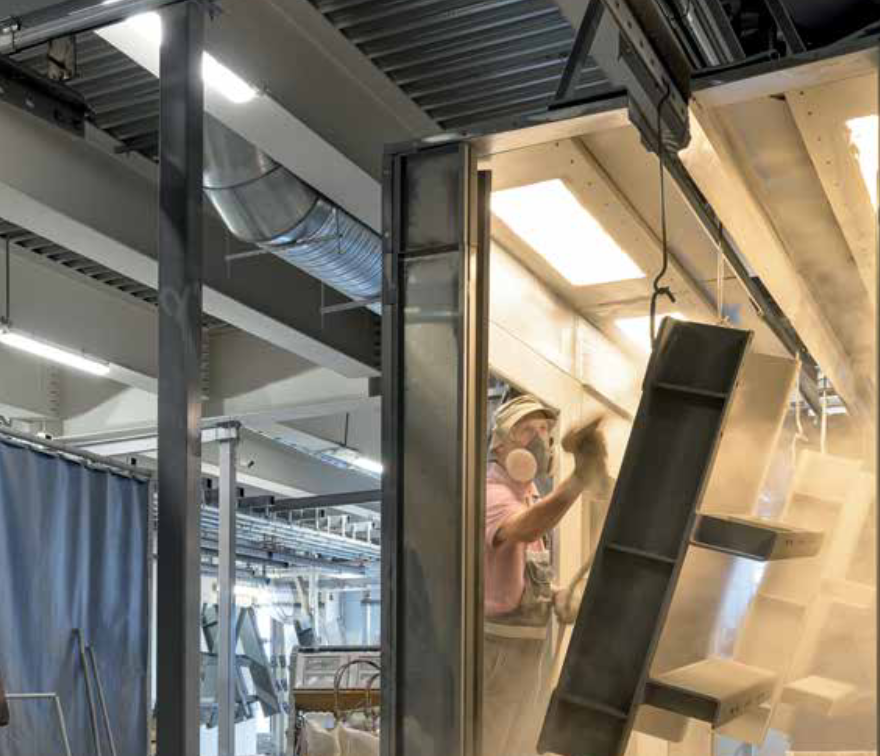
Euroformat works as a full-cycle manufacturer: from technical selection and manufacturing to installation and service support. For an owner or developer, this means one responsible partner who understands the equipment, the project and future operation.
What to include in the technical specification
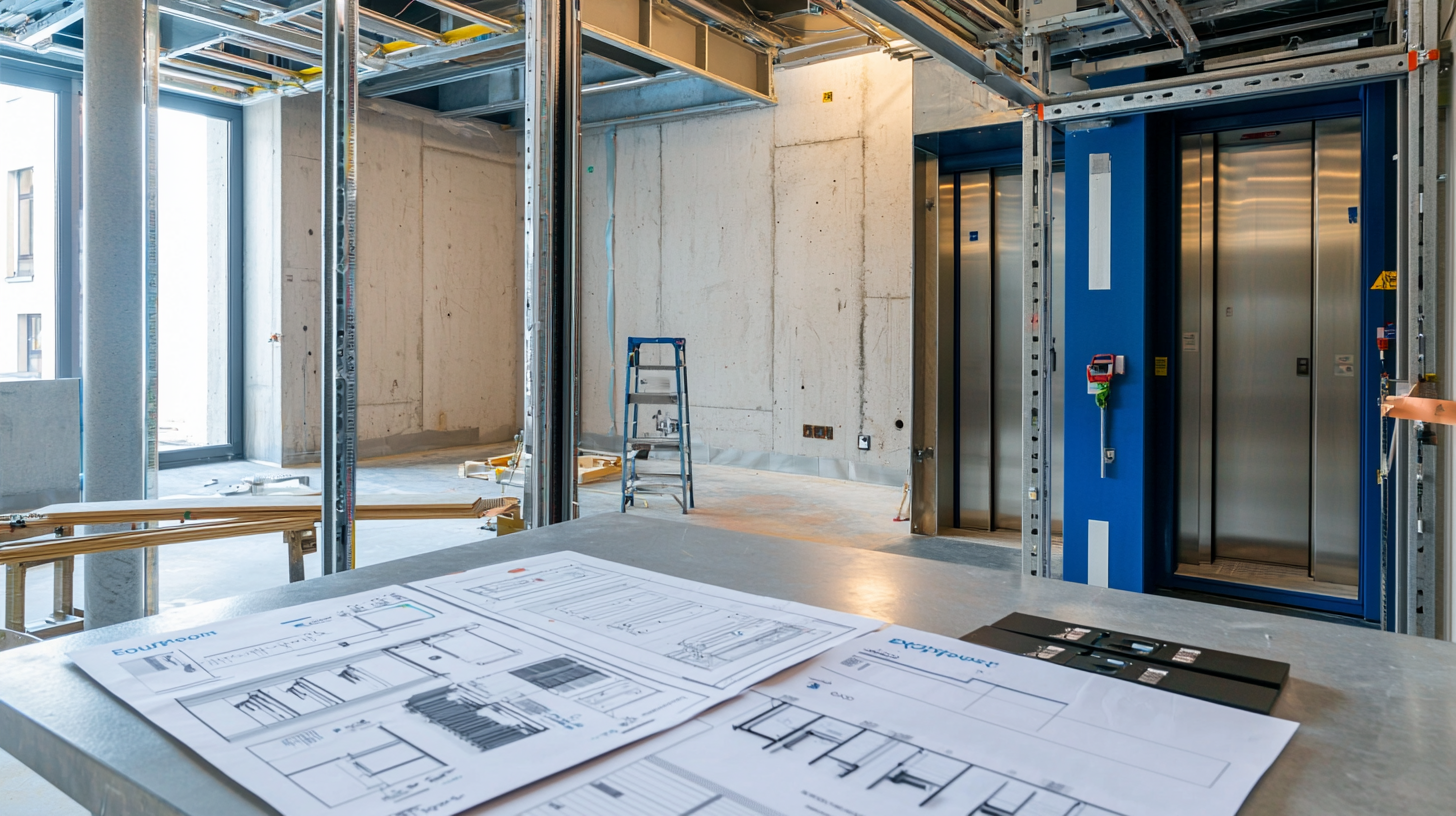
The technical specification for a business centre should be broader than a list of basic parameters. It should describe how the building actually operates.
The technical specification should include:
- the purpose of the property;
- number of floors;
- expected number of users;
- peak movement hours;
- requirements for the lift group;
- shaft parameters;
- cabin and finish requirements;
- connection with parking or technical zones;
- service requirements;
- lifecycle expectations.
This is how a solution is created that works not only at the building handover stage, but also in everyday operation.
The next step with Euroformat
If you need a lift for an office, business centre or another commercial property, it is worth starting with consultation and analysis of the technical specification. Euroformat helps select a lift solution for a specific building, its architecture, traffic and future operating mode.
Euroformat commercial lift equipment page:
https://euroformat.com/en/industries
Frequently asked questions
How do you choose the right lift for a business centre?
Start with passenger flow analysis: the number of floors, tenants, employees, visitors and peak hours. Then assess the shaft parameters, requirements for the lift group, cabin design and service. For a business centre, it is important to select a solution based on real people movement scenarios, not only on basic specifications.
Why is lift service important for an office building?
In a business centre, lift downtime quickly affects tenant comfort, reception operations, visitor movement and the overall perception of the property. That is why service should be considered at the equipment selection stage. Not only response to breakdowns matters, but also regular technical support.
How does cabin design affect the image of a business centre?
The lift cabin is part of the route taken by a tenant, guest or client inside the building. Its appearance, lighting, materials and ergonomics support the overall level of the property. For premium business centres, this is a matter of image; for practical office buildings, it is also a matter of durability.
Why contact Euroformat for a commercial property?
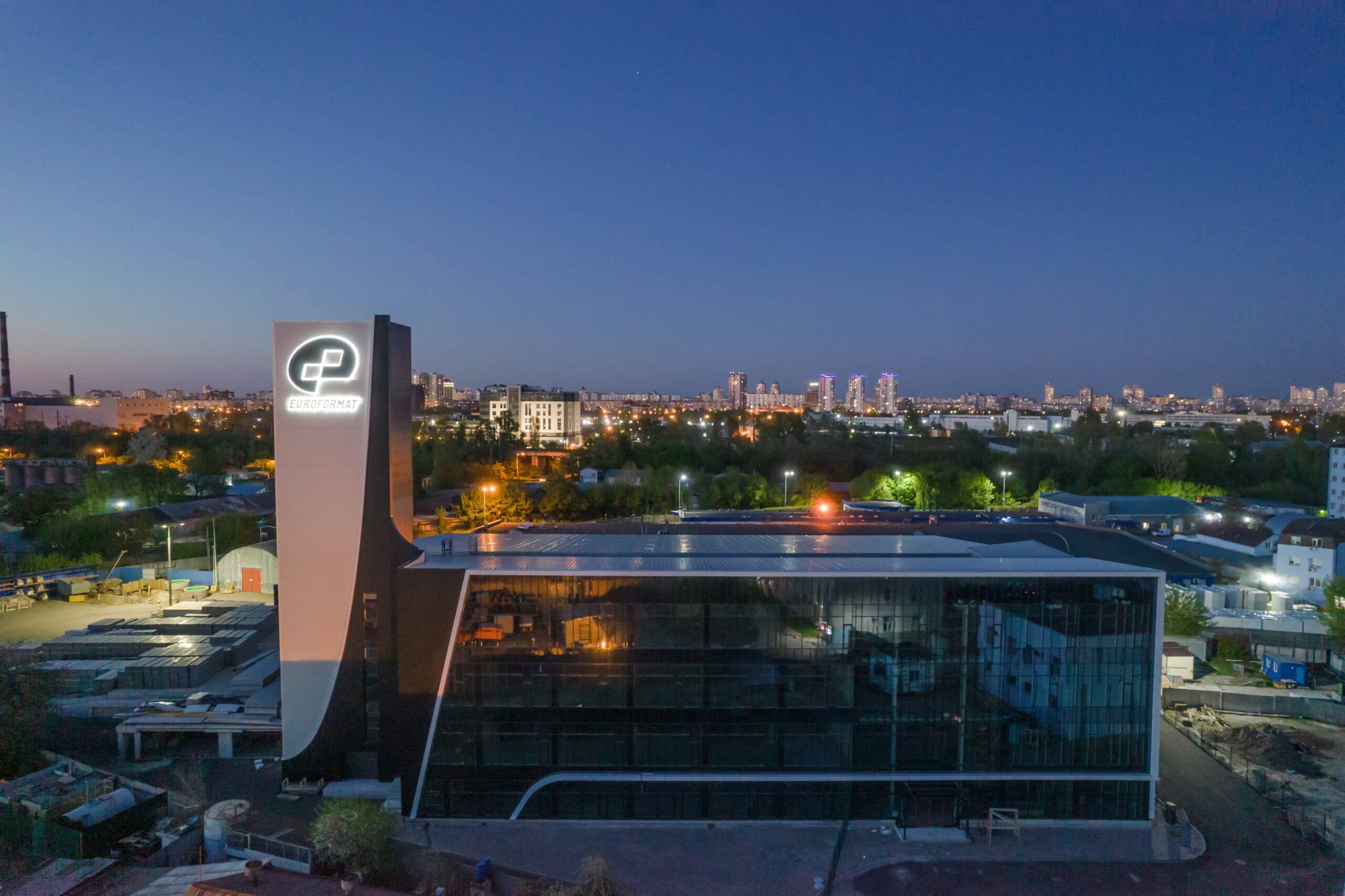
Euroformat has its own lift equipment production facilities in Kyiv and works with full-cycle projects: from technical selection to service support. For a developer, this means the opportunity to receive a solution for a specific business centre, its passenger flow, architecture and future operation.
Conclusion
A lift in a business centre should be selected not as separate equipment, but as part of the service for tenants and visitors. It is important to consider passenger flow, peak hours, cabin design, service and the full lifecycle cost. The more accurately the technical specification is prepared, the higher the chances of receiving a solution that will operate reliably in real commercial real estate conditions.