





Lift equipment safety standards in Ukraine
Lift equipment safety is essential for protecting passengers and ensuring reliable operation in apartment buildings, offices, public facilities and private houses. Lift requirements in Ukraine are established by technical regulations, national building regulations and standards harmonised with European documents.
This article covers the principal safety standards, operating rules, inspection requirements and conformity assessment procedures for lift equipment.
Main lift safety standards in Ukraine
DSTU EN 81-20:2022 and DSTU EN 81-50:2022 are among the principal standards applied to the design and manufacture of modern lifts.
DSTU EN 81-20 establishes safety requirements for the construction and installation of passenger and passenger-and-goods lifts. DSTU EN 81-50 covers design rules, calculations, examinations and tests for lift components.
The main safety areas include:
- Lift and lift cabin construction. Supporting structures, the lift cabin, doors, guide rails and other components must withstand the specified loads and protect passengers during normal operation.
- Protection against falling and uncontrolled movement. Lifts are fitted with safety gear, overspeed governors, braking devices and other systems designed to stop the lift cabin in a hazardous situation.
- Door protection. Automatic doors are equipped with devices that prevent them from closing when a passenger or object is in the doorway.
- Overload protection. The lift must not start when its rated load is exceeded. A visual or audible warning informs passengers of the overload.
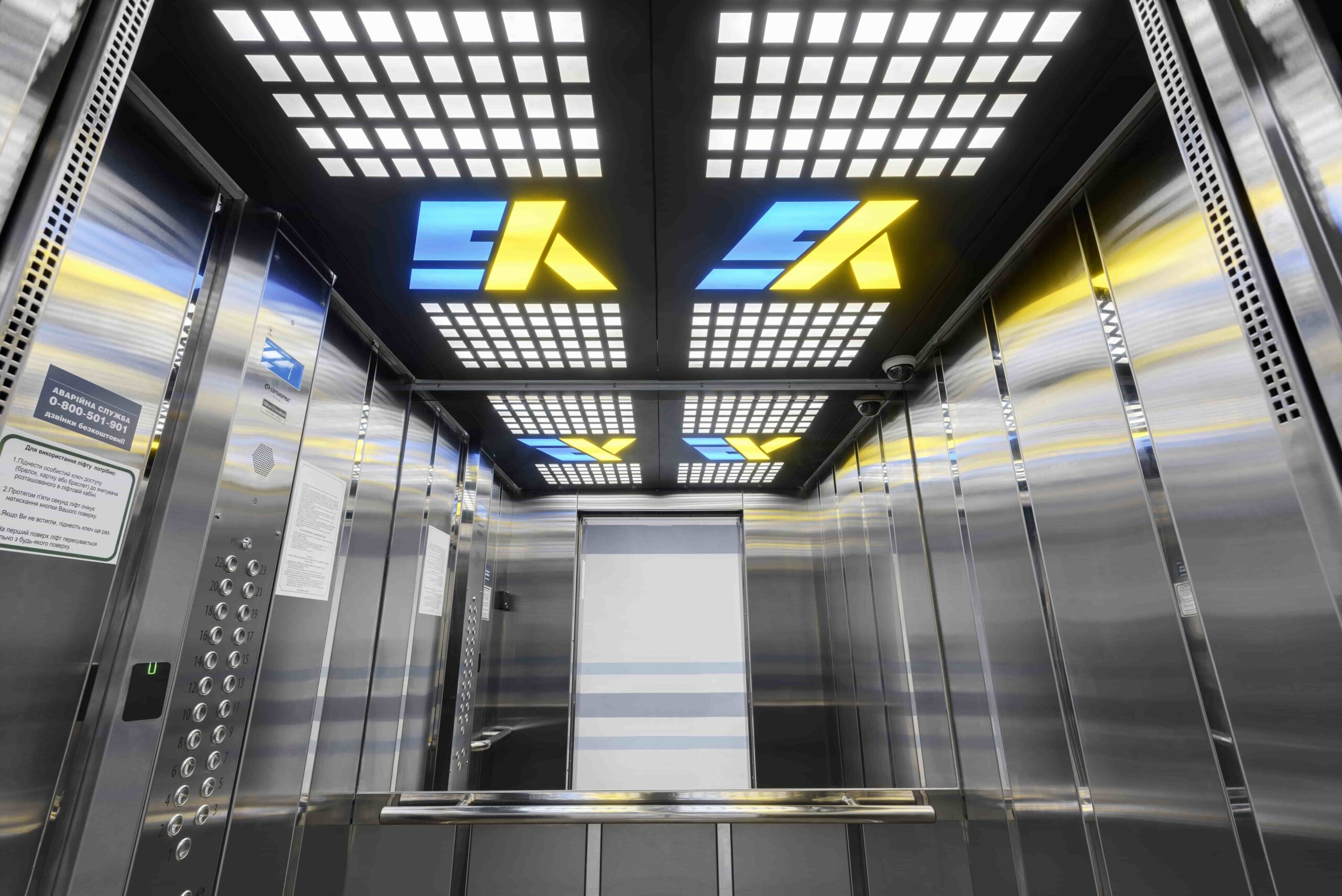
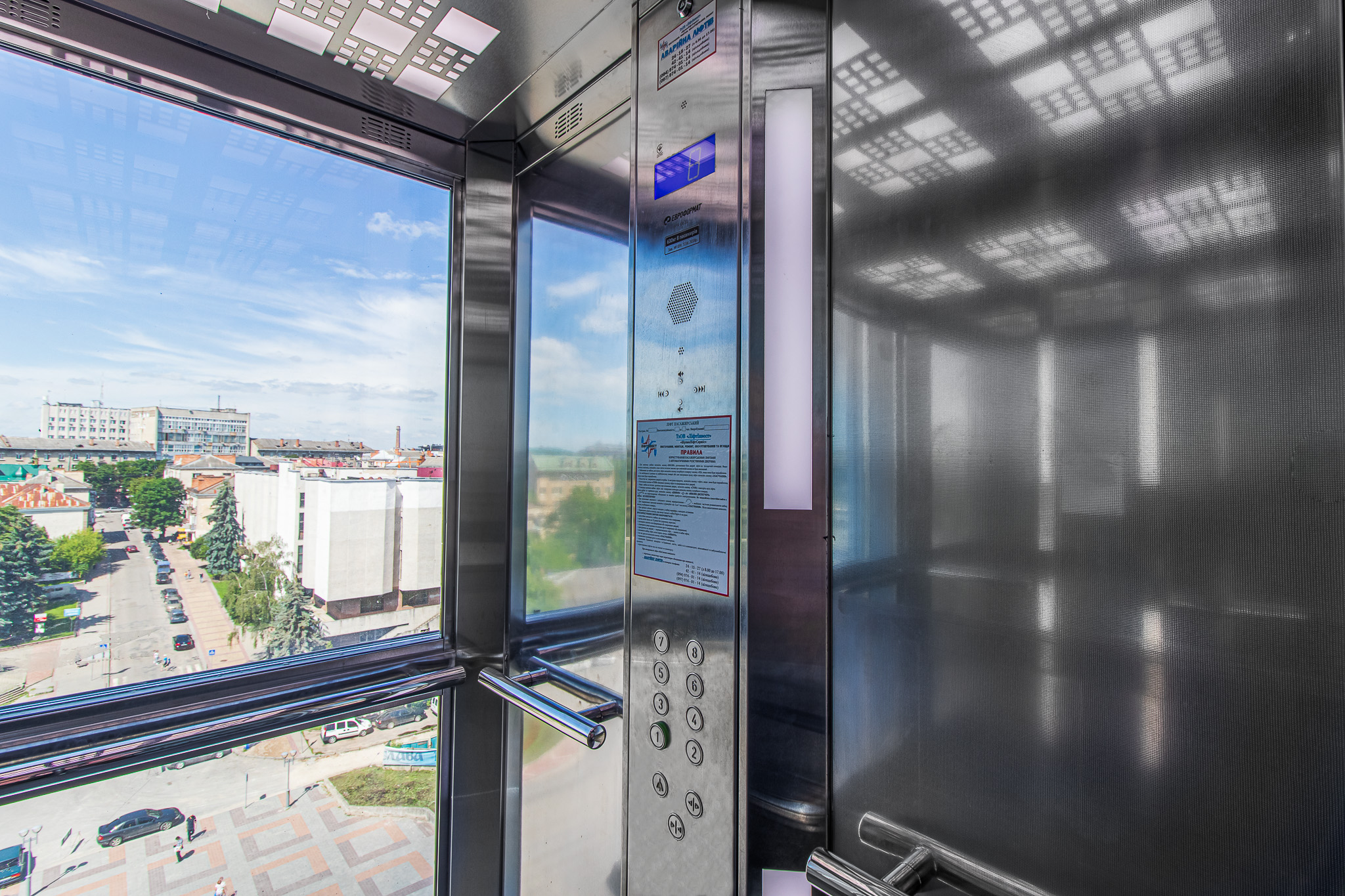
- Emergency communication. A passenger lift cabin must have a means of calling for assistance and two-way communication with an emergency or control point.
- Levelling accuracy. The lift cabin should stop level with the landing to reduce the risk of tripping and provide convenient access for people with reduced mobility.
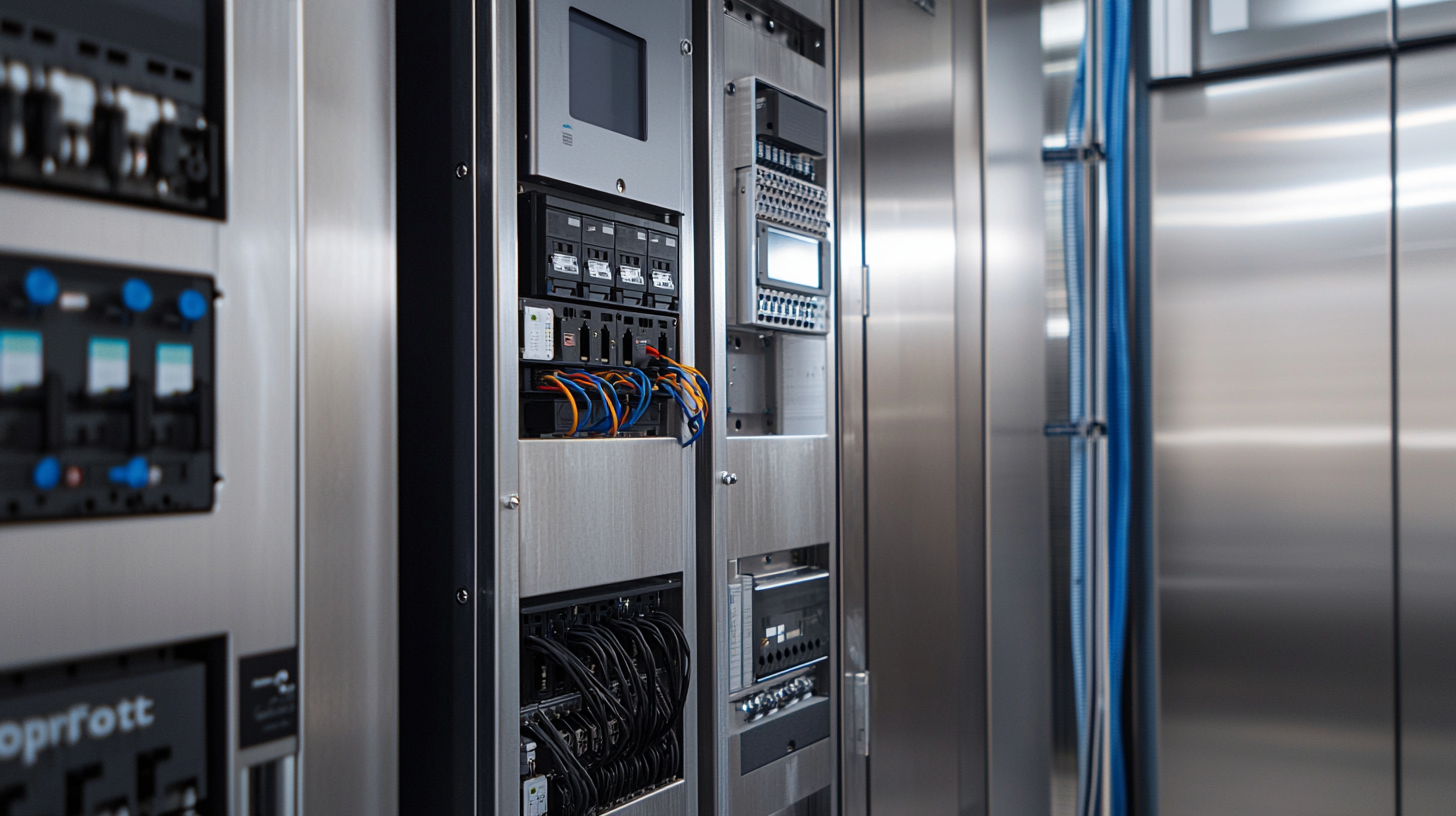
- Electrical safety. Electrical systems require suitable insulation, earthing and protection against short circuits, overloads and other faults.
- Lighting and ventilation. The lift cabin must have appropriate normal and emergency lighting as well as the required ventilation.
- Fire safety. The response of a lift to a fire alarm is determined by the building design and applicable standards. A standard passenger lift should not automatically be regarded as a means of evacuation during a fire.
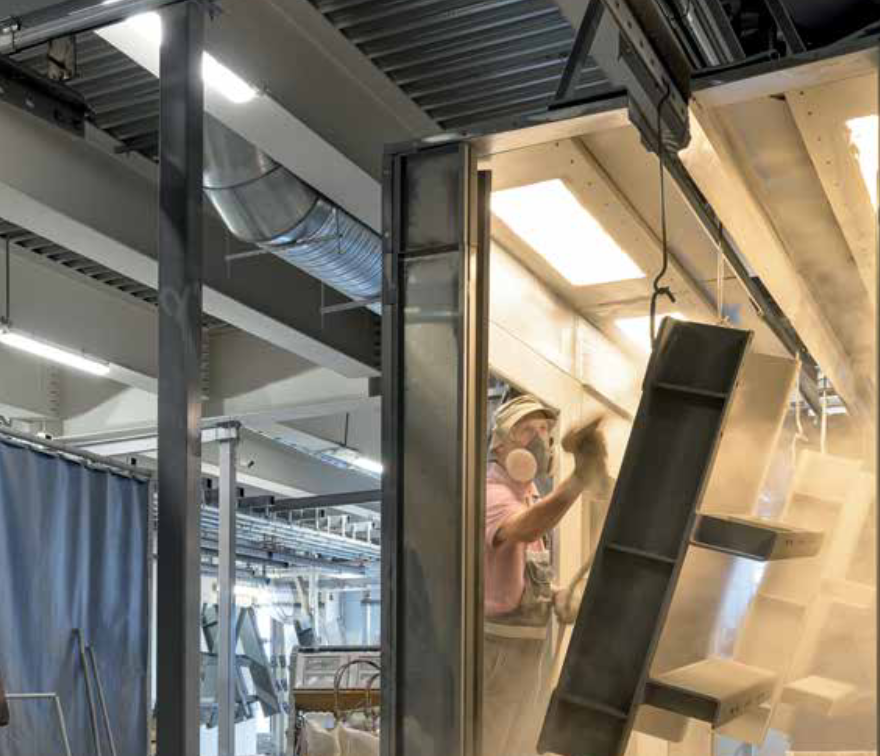
Euroformat, one of Ukraine’s leading lift manufacturers, develops equipment with applicable Ukrainian and European safety requirements in mind.
The Technical Regulation on lifts
The principal regulatory document governing the placing of new lifts into service is the Technical Regulation on lifts and safety components for lifts, approved by Resolution No. 438 of the Cabinet of Ministers of Ukraine dated 21 June 2017.
The regulation establishes essential health and safety requirements and defines the responsibilities of component manufacturers, lift installers, importers and other market participants.
Before a lift is placed into service, it must complete the applicable conformity assessment procedure. Once the procedure has been completed successfully, the installer draws up a declaration of conformity and the relevant conformity marking is affixed to the equipment.
Rules for safe lift operation
Lift safety depends not only on the design of the equipment but also on correct operation and regular maintenance.
The main requirements include:
- Observing the rated load. The lift must not carry a load exceeding the value displayed in the lift cabin and specified in the technical documentation.
- Using the lift for its intended purpose. Dangerous, flammable or oversized goods must not be transported in a passenger lift unless the equipment has been designed for that purpose.
- Removing faulty equipment from service. Unusual noise, jerking, door problems, stops between floors or other faults should be reported immediately. The lift should not remain in operation until it has been inspected by qualified specialists.
- Correct action when the lift cabin stops. Passengers should not force the doors open or leave through an emergency hatch. They should use the emergency communication system and follow the operator’s instructions.
- Restrictions during a fire. In the event of a fire alarm, passengers should use the designated emergency exits rather than a standard passenger lift.
- Protection against unauthorised access. Machine rooms, control cabinets and other technical areas must only be accessible to qualified personnel.
Lift maintenance
A lift must be maintained in accordance with the manufacturer’s instructions, its operating conditions and the approved servicing schedule.
Planned maintenance may include:
- checking the braking and drive systems;
- inspecting suspension ropes or other load-bearing elements;
- checking guide rails and lift cabin shoes;
- inspecting lift cabin and landing doors;
- testing the safety gear and overspeed governor;
- checking electrical circuits and the control system;
- testing emergency lighting and two-way communication;
- lubricating and adjusting mechanical components;
- replacing worn parts.
The frequency of individual tasks depends on the lift model, the intensity of use and the requirements of the technical documentation.
Installation and commissioning requirements
Safe operation begins with proper design and installation.
The main stages include:
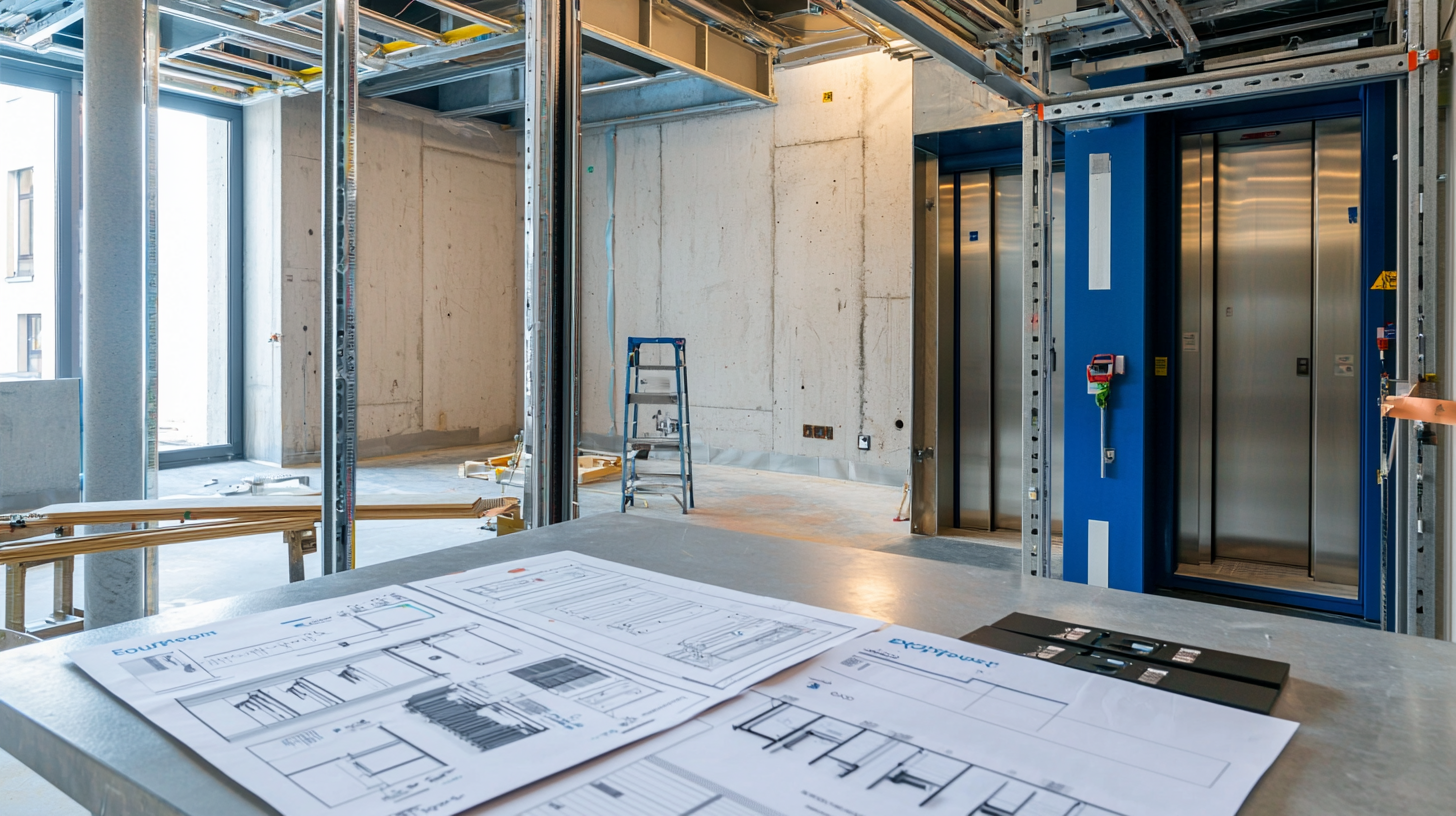
Project preparation. The design considers the shaft dimensions, number of stops, intended use, calculated loads, electrical supply and architectural characteristics of the building.
Shaft preparation. The building structures must comply with the project and withstand the specified loads. Required safety spaces, lighting and maintenance access must also be provided.
Equipment installation. Qualified specialists install the lift in accordance with the manufacturer’s instructions and approved project documentation.
Testing and commissioning. The drive, control system, doors, levelling accuracy, emergency communication and all protective devices are tested.
Conformity assessment. Before being placed into service, the installed lift completes the conformity assessment procedure required by the Technical Regulation.
It is therefore more accurate to state that a new lift undergoes conformity assessment after installation rather than saying that every lift receives an individual certificate before installation begins.
Lift safety inspections
During operation, the condition of the lift is monitored through maintenance, technical inspections and, where required, expert examination.
The inspection may include:
Mechanical component inspection. Suspension ropes, guide rails, brakes, doors, drive systems and supporting structures are examined.
Electrical system inspection. Safety circuits, earthing, insulation, control equipment and protective devices are checked.
Safety system testing. Safety gear, the overspeed governor, overload protection, emergency communication and other devices are tested.
Travel and levelling checks. Acceleration, braking, speed and the position of the lift cabin in relation to the landing are assessed.
Documentation review. The lift passport, servicing records, previous inspection results and information about repairs or modernisation are examined.
A periodic technical inspection is carried out once every two years. An extraordinary inspection may be required after an accident, reconstruction, modernisation, an extended period out of service or in other cases specified by the applicable requirements.
When a lift does not comply with safety requirements, it must be removed from service until the identified defects have been corrected. Depending on its condition, repair, major refurbishment or modernisation may be required.
Lifts from Euroformat
Euroformat offers passenger, goods and specialised lifts for residential, commercial and public buildings.
Customers can receive a complete range of services:
- consultation and equipment selection;
- project development;
- lift manufacturing and supply;
- installation and commissioning;
- preparation for conformity assessment;
- warranty and post-warranty servicing;
- repair and modernisation.
The lifts are manufactured using reliable Ukrainian and European components and can be adapted to the requirements of each property.
To purchase a lift in Kyiv or another Ukrainian city, contact the Euroformat team. The specialists will recommend suitable equipment, calculate the project cost and answer questions about installation and maintenance.